Proposal vs. Quote vs. Estimate: What's the Difference
An estimate is a non-binding ballpark. A quote is a fixed, binding price. A proposal sells an approach before it prices one. Sending the wrong one costs you money or credibility. Here's the decision rule.
RevExOS
Q2C Consulting
These three words get used interchangeably in casual conversation and mean genuinely different things in practice, with different legal weight and different industry conventions attached to each. Sending an estimate when a client expects a binding quote, or a bare price list when the work actually needed a proposal, causes real problems: disputed pricing, scope arguments, or a proposal that reads like an invoice and gets rejected for feeling presumptuous.
The Core Difference: Binding Weight
An estimate is a non-binding, good-faith approximation. It tells a client roughly what something will cost based on the information available, with the explicit understanding that the final price may change once the work is fully scoped or once unexpected conditions are found. This is the default document in construction, trades, and auto repair, where "we won't know the real cost until we open the wall" is a genuine, common situation. An estimate protects you from being held to a number that was always a guess.
A quote is a binding, fixed-price commitment. Once a client accepts a quote, you're agreeing to deliver the stated scope at the stated price, full stop. Quotes are the right document when the scope is fully known upfront and doesn't depend on discovering anything mid-project - a defined web development project, a fixed consulting deliverable, a bulk product order. If your price might change once you start, that's an estimate, not a quote, and calling it a quote when it isn't creates a real dispute the moment the price moves.
A proposal is a narrative document that sells an approach, not just a price. It's the right format when the work itself is being pitched, not just priced - when a client needs to be convinced of your methodology, your understanding of their problem, or your specific plan before they care what it costs. Proposals are common in marketing, consulting, and agency work precisely because the value being sold is the thinking, not just a deliverable that could be described in one line. A proposal usually still ends in a price, but the price is the last thing on the page, not the first.
The Decision Rule
Ask these three questions in order:
1. Does the client need to be convinced of your approach, or do they already know what they want and just need a price? If they need convincing, write a proposal. If they already know the scope and just want a number, skip straight to a quote or estimate.
2. Is the final price knowable now, or does it depend on something you'll only discover once work starts? Knowable now means a quote. Depends on discovery means an estimate.
3. Is this industry convention-driven? Trades and construction default to estimates even for fairly well-defined jobs, because physical work has enough unknowns (what's actually behind that wall) that binding pricing upfront is genuinely risky for the contractor. Professional services (consulting, agencies, freelance work) default to quotes or proposals because the deliverable is defined by agreement, not discovered mid-job. Follow your industry's convention unless you have a specific reason not to; a client in construction who receives a binding quote instead of the expected estimate may read it as inflexible, and a client in consulting who receives a hedge-everything estimate may read it as unprepared.
What Happens If You Get It Wrong
Sending a quote when you meant an estimate locks you into a price you may not be able to honor once you discover the real scope, and asking a client to pay more after a "quote" was accepted is a credibility problem even when it's justified.
Sending an estimate when the client expected a binding quote creates the opposite problem: a client who budgeted against your number and then receives a materially different final invoice will reasonably feel misled, even if your estimate technically included the right disclaimers.
Sending a bare price list when the work needed a proposal undersells work that required real thinking to scope, and gives the client nothing to evaluate except the number, which pushes the conversation straight to negotiating that number down.
Sending a full narrative proposal for a commodity job that just needed a quote can read as padding or as trying to justify a price that should have been able to stand on its own.
How RevExOS's Tools Map to This
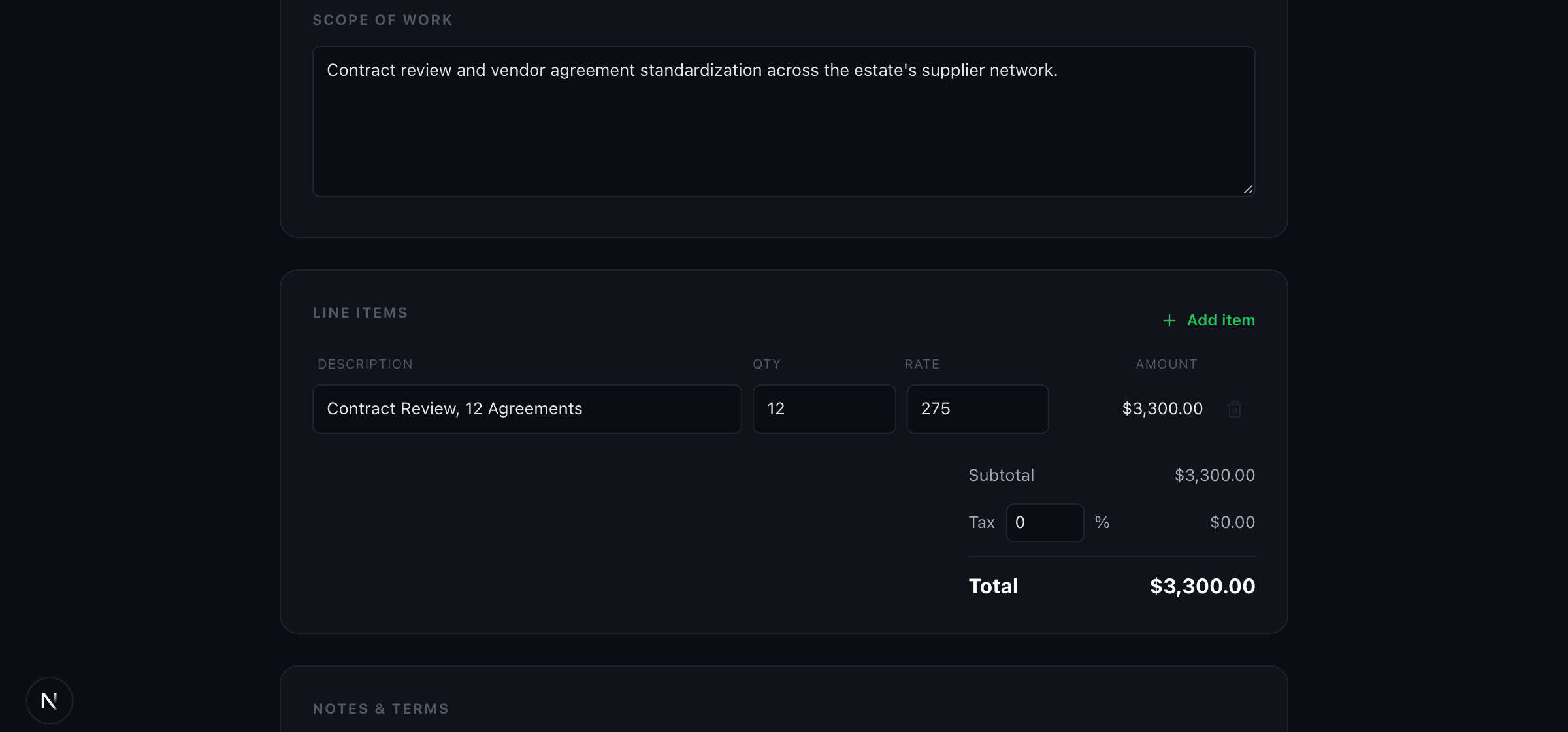
The Quote & Estimate Generator has a toggle between the two document types at the top of the builder - same underlying tool, different labels and framing (a quote's "Valid Until" date reads as a binding-price expiration; an estimate's reads as "this approximation is only good for this long"). The Proposal Generator is the narrative format, with a dedicated Scope of Work section for the approach-selling part that a quote or estimate doesn't have room for. All three share the same "Client accepted? Convert to invoice" one-click handoff into the Invoice Generator, so picking the right document type upfront doesn't cost you anything on the billing side once the work is agreed to.
Pick based on what the client actually needs to see, not habit: Quote & Estimate Generator or Proposal Generator, both free, no signup.
Frequently Asked Questions
- What's the main difference between a quote and an estimate?
- A quote is a binding, fixed price. An estimate is a non-binding, good-faith approximation that can change once the full scope is known.
- When should I send a proposal instead of a quote?
- When the client needs to be convinced of your approach or methodology before price matters, not just given a number for work they've already decided to do.
- Can I switch between a quote and an estimate in the free tool?
- Yes. The Quote & Estimate Generator has a toggle between the two document types using the same underlying builder.