Medical Documents AI OCR
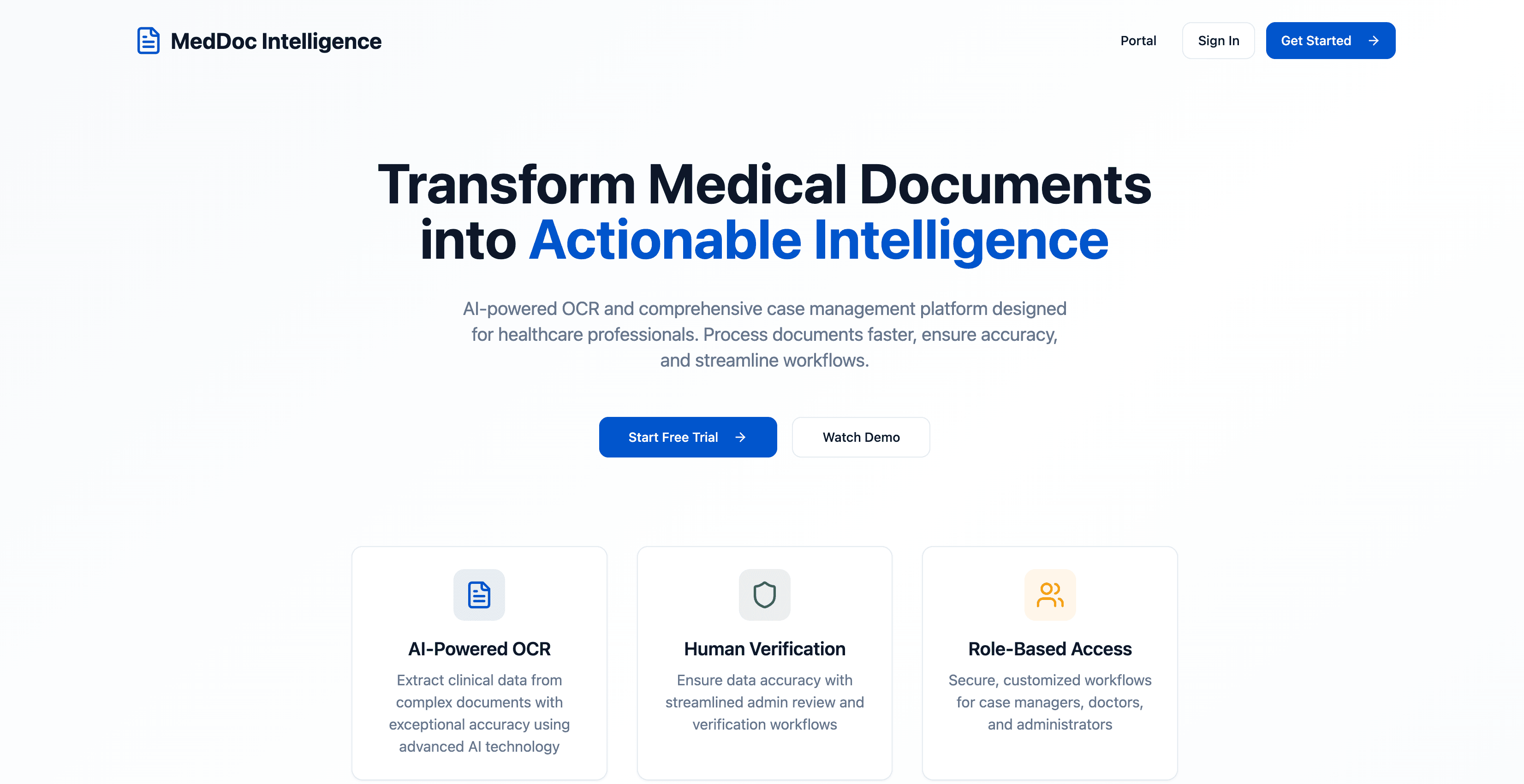
An AI system that parses medical report PDFs of around 100 pages (tested up to 250), stores the extracted content in a database, vectorizes it, and lets users chat with each case file. Each document also produces a filled-in template report, and every answer cites its source for audit.
How It Works
Upload and assign
A case handler uploads the medical record PDF and assigns the case to a doctor. The portal tracks processing status per case.
Self-hosted OCR
A self-hosted DeepSeek OCR model reads every page, so patient documents never go to a third-party OCR API. Each page gets a confidence score.
Anonymize, store and embed
Patient identifiers are anonymized, the text is stored in Supabase, and chunks are embedded into a pgvector store for retrieval.
Chat with the case file
Doctors ask questions about the case and get answers that cite the document name, page and section, so every claim can be checked.
Template reports
Each report template is a set of predefined questions. The system answers them from the extracted content, cites the source page for each answer, and exports a PDF.
What it shows
- •Self-hosted DeepSeek OCR model, so patient documents never go to a third-party OCR API
- •Extracted text stored in Supabase and embedded into a Supabase vector store for retrieval
- •Template reports: each template is a set of predefined questions, answered from the extracted content and exported as a PDF
- •Chat answers and template answers cite the document name, page and section they came from, for audit
- •Patient data anonymized before indexing, encrypted at rest and in transit, with role-based access for case handlers, doctors and admins
- •Document portal: cases assigned to a case handler and doctor, processing status, original PDF, OCR report and template report per case
Stack
Screens
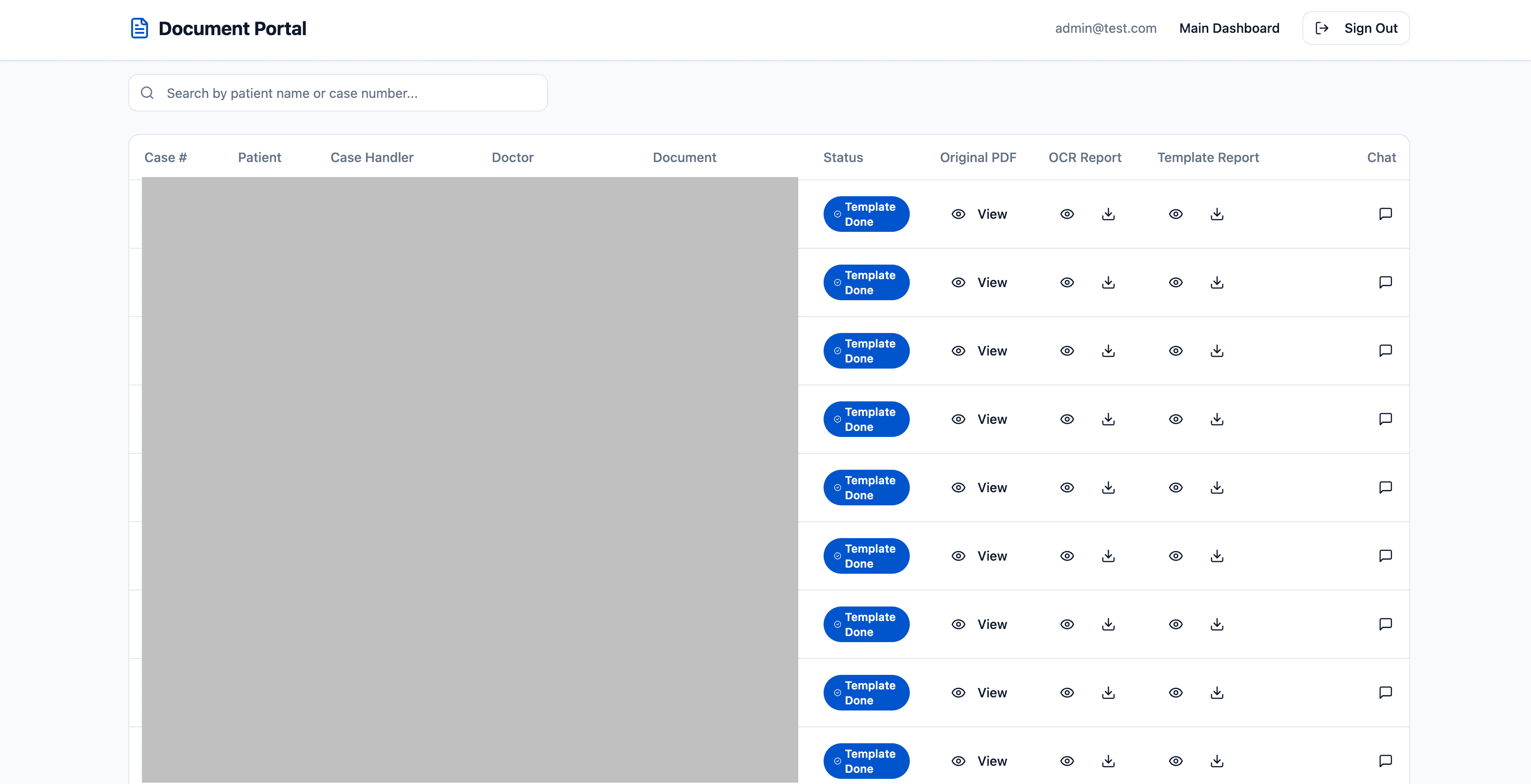
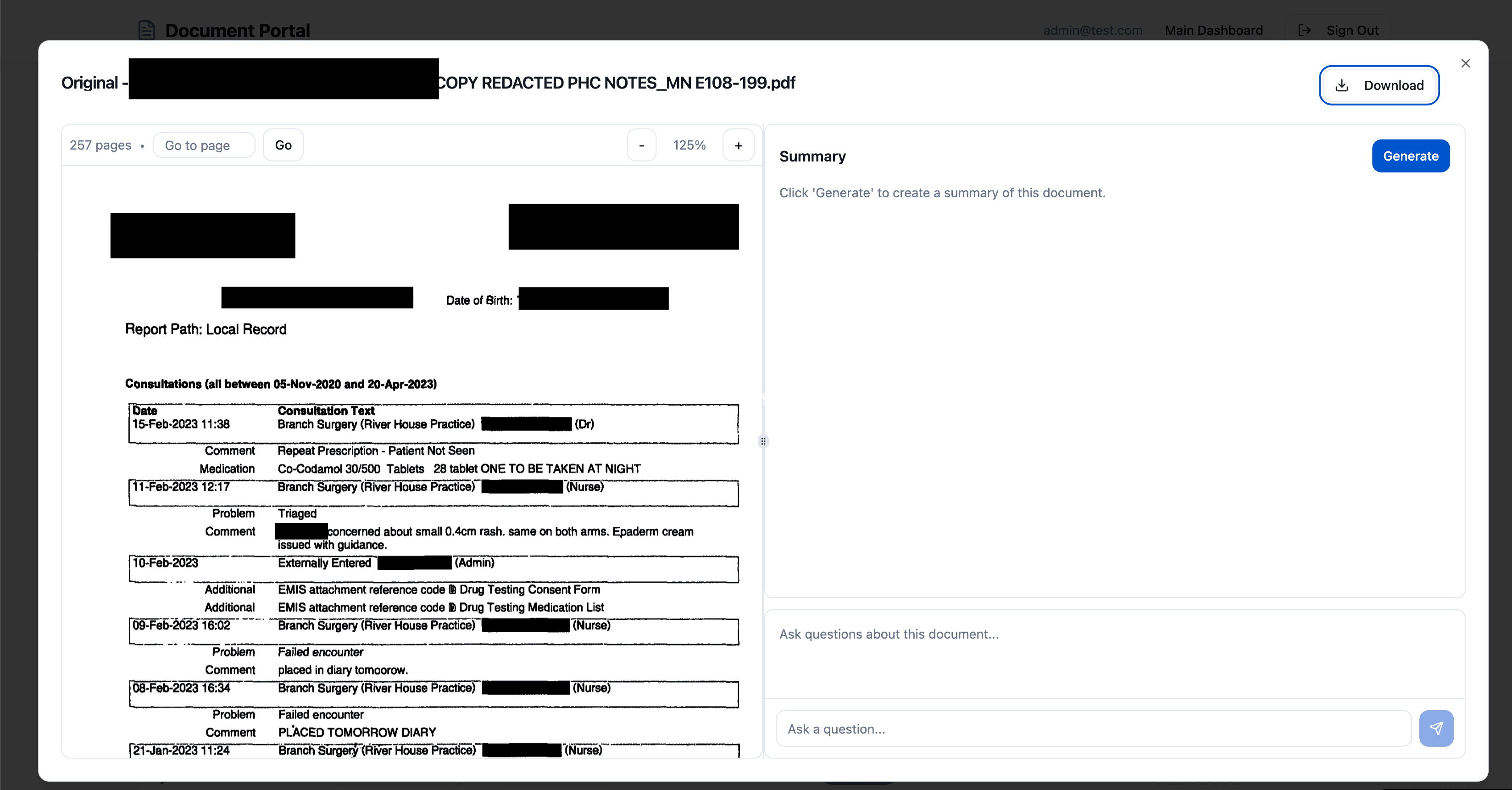
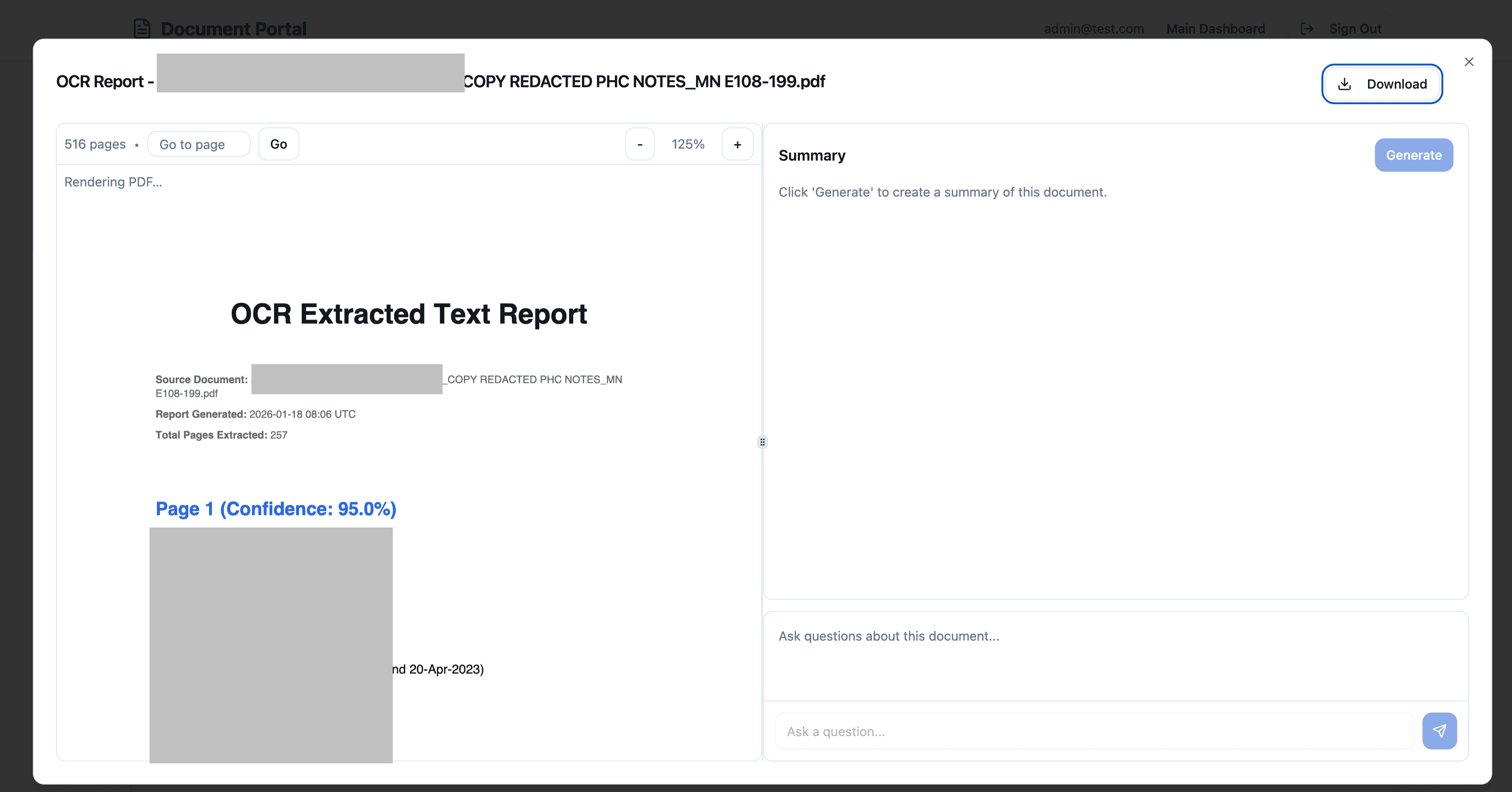
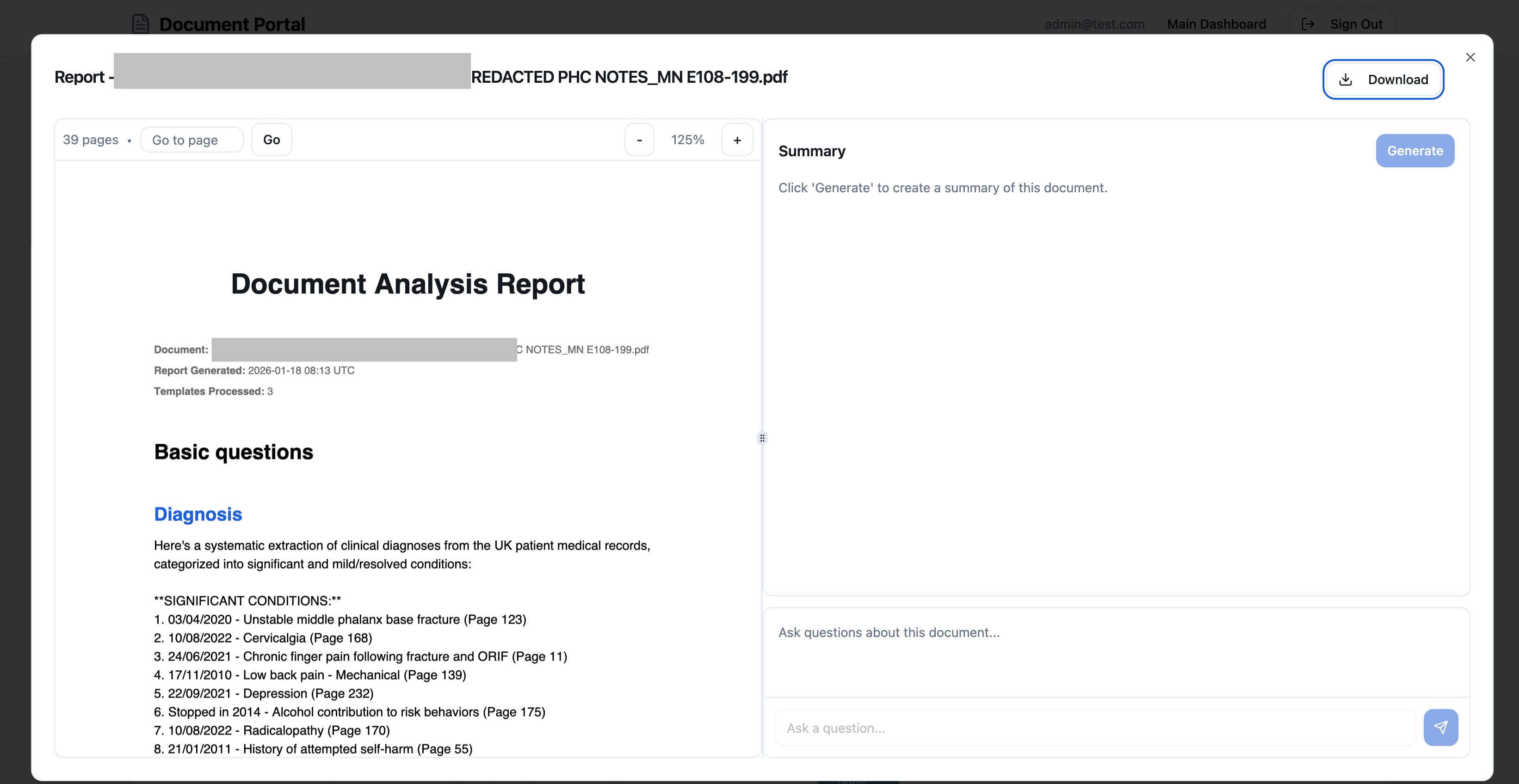
Client work: patient details in every screenshot are redacted, and there is no public repo or demo.